
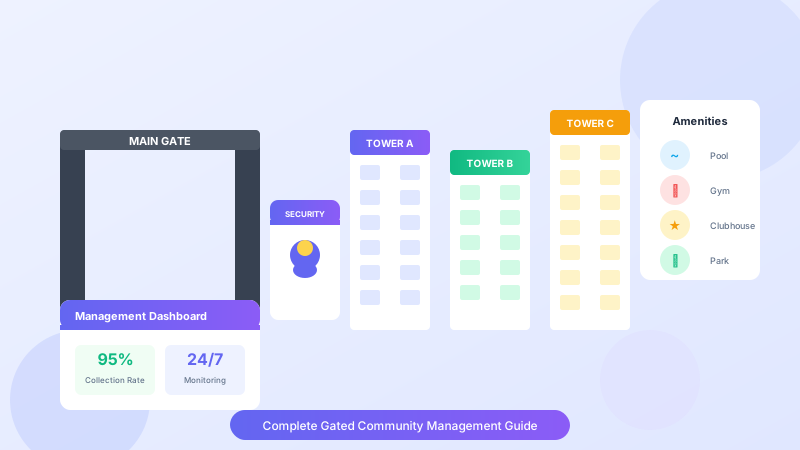
Complete Guide to Managing a Gated Community in India

Connected Hood Team
The Connected Hood team shares expert insights on society management and community living in India.January 30, 2026
9 min read
Learn everything about gated community management in India, from security and finances to compliance and resident engagement. Expert best practices inside.
#Complete Guide to Managing a Gated Community in India
Gated communities have become the preferred choice for urban Indian families seeking security, amenities, and a sense of community. With over 35,000 gated communities across major Indian cities and an estimated 15 million families living in them, the demand for professional management has never been higher.
Yet managing a gated community is fundamentally different from managing a standalone apartment building. The scale is larger, the services more diverse, and the expectations higher. This guide provides a comprehensive framework for effective gated community management in the Indian context.
#What Makes Gated Community Management Unique
Gated communities in India typically range from 100 to 2,000+ units spread across multiple towers or villas. This scale introduces complexities that smaller societies do not face.
#Multi-Dimensional Responsibilities
Security management:
- Perimeter security across large areas
- Multiple entry and exit points
- Internal road management
- Visitor verification at scale
- Emergency response coordination
Financial management:
- Budgets often exceeding Rs. 2-5 crore annually
- Multiple revenue streams (maintenance, amenities, commercial)
- Sinking fund management for major repairs
- Utility bill aggregation and distribution
Service delivery:
- Housekeeping across common areas
- Landscaping and horticulture
- Swimming pool and gym maintenance
- Clubhouse operations
- STP and WTP plant operations
Regulatory compliance:
- Fire safety certifications
- Lift maintenance contracts
- Environmental clearances
- Labour law compliance for staff
#The Stakeholder Challenge
Large gated communities bring together diverse stakeholders:
- Resident owners with long-term interests
- Tenant residents who may be less engaged
- Commercial establishments with different needs
- Staff and service providers
- Developers who may retain some control initially
Balancing these interests requires diplomatic skill and clear governance frameworks.
#Setting Up an Effective Management Structure
#The Management Committee
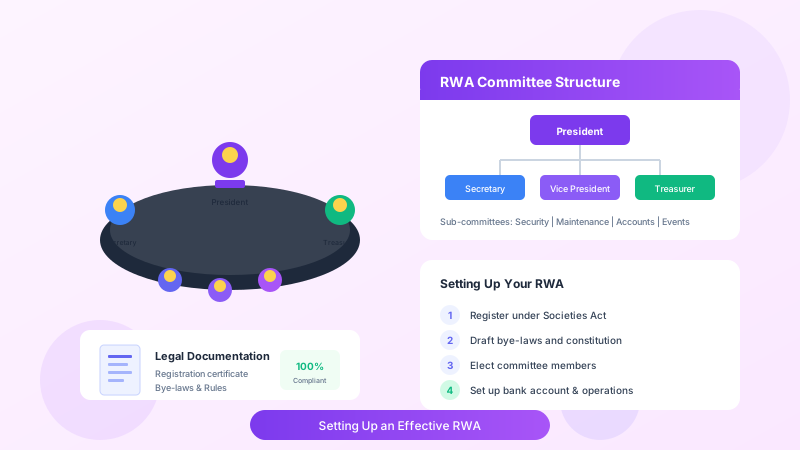
Every gated community needs a governing body. In India, this is typically:
Residents' Welfare Association (RWA):
- Registered under the Societies Registration Act, 1860
- Suitable for most residential communities
- Democratic structure with elected members
Cooperative Housing Society:
- Registered under state cooperative laws
- Mandatory in Maharashtra and some other states
- More regulated structure
Apartment Owners' Association (AOA):
- Formed under state Apartment Ownership Acts
- Focus on common area management
- Works alongside RWA in some cases
#Committee Roles and Responsibilities
A well-functioning committee typically includes:
| Role | Key Responsibilities | Time Commitment | |------|---------------------|-----------------| | President | Overall leadership, external relations, conflict resolution | 15-20 hours/month | | Secretary | Documentation, compliance, meeting coordination | 20-25 hours/month | | Treasurer | Financial oversight, budgeting, audit coordination | 15-20 hours/month | | Joint Secretary | Assists secretary, handles specific projects | 10-15 hours/month | | Committee Members | Sub-committee leadership, resident liaison | 8-12 hours/month |
#Documentation Essentials
Maintain these critical documents:
Governance documents:
- Registered bye-laws
- Rules and regulations
- AGM and SGM minutes
- Committee meeting minutes
Financial records:
- Annual budgets and actuals
- Audit reports
- Bank statements and reconciliations
- Tax filings (if applicable)
Operational records:
- Vendor contracts
- Staff records
- Maintenance logs
- Insurance policies
Compliance certificates:
- Fire NOC
- Lift safety certificates
- STP/WTP compliance
- Structural audit reports (for older buildings)
#Security Management Best Practices
Security is the primary reason families choose gated communities. Delivering on this promise requires systematic management.
#Access Control Framework
Vehicle entry management:
- RFID tags for resident vehicles
- Separate lanes for registered and visitor vehicles
- Automatic number plate recognition for premium communities
- Clear protocols for commercial and delivery vehicles
Pedestrian access:
- Biometric or card-based entry for residents
- Visitor pre-registration system
- Escort protocols for unregistered visitors
- Service provider entry documentation
Multi-gate coordination:
- Centralized visitor information system
- Communication between gates
- Consistent protocols across all entry points
- Emergency lockdown capabilities
#Guard Force Management
Most gated communities employ 20-100+ security personnel. Effective management includes:
Recruitment and training:
- Background verification mandatory
- Basic security training
- Community-specific orientation
- Regular refresher training
Deployment optimization:
- Shift scheduling to match traffic patterns
- Strategic positioning based on risk assessment
- Rotation to prevent complacency
- Patrol routes and checkpoints
Performance monitoring:
- Daily duty logs and incident reports
- Random supervisor checks
- Resident feedback collection
- Technology-aided monitoring (GPS tracking, CCTV)
#Emergency Preparedness
Fire safety:
- Functional fire equipment in all common areas
- Regular fire drills (quarterly recommended)
- Evacuation routes clearly marked
- Fire safety training for staff and residents
Medical emergencies:
- First aid kits at security posts
- Tie-ups with nearby hospitals
- Ambulance access protocols
- Basic first aid training for guards
Natural disasters:
- Disaster response plan documented
- Emergency supplies maintained
- Communication chains established
- Annual drill for major scenarios
#Financial Management Essentials
Sound financial management builds trust and ensures long-term community sustainability.
#Budgeting Framework
Revenue sources:
- Monthly maintenance charges (primary)
- Sinking fund contributions
- Amenity booking fees
- Interest income
- Penalty collections
- Commercial area rentals (if applicable)
Expense categories:
- Staff salaries and benefits (typically 40-50%)
- Electricity for common areas (15-20%)
- Security services (15-25%)
- Maintenance and repairs (10-15%)
- Administrative expenses (5-10%)
- Insurance and compliance (2-5%)
#Billing Best Practices
Transparent invoicing:
- Itemized bills showing all charges
- Clear due dates and penalty terms
- Previous balance and payments shown
- Multiple payment channel information
Collection efficiency:
- Auto-debit and standing instruction options
- Digital payment integration (UPI, cards, net banking)
- SMS and email reminders before due date
- Progressive escalation for defaulters
Default management:
- Grace period clearly communicated
- Interest on delayed payment (typically 18-24% p.a.)
- Amenity access restrictions for persistent defaulters
- Legal notice as last resort
#Sinking Fund Management
The sinking fund is crucial for major repairs and replacements. Best practices:
- Separate bank account for sinking fund
- Contribution based on professional assessment
- Investment in safe instruments only
- Clear approval process for utilization
- Annual disclosure to all members
#Communication and Resident Engagement
Effective communication prevents conflicts and builds community spirit.
#Communication Channels
Official announcements:
- Society app notifications (primary)
- Email for detailed communications
- Notice boards for regulatory requirements
- SMS for urgent matters
Feedback collection:
- Periodic satisfaction surveys
- Suggestion box (physical and digital)
- Open house sessions with committee
- Exit feedback from departing residents
Community building:
- Event announcements and RSVPs
- Interest group coordination
- Marketplace for resident exchanges
- Achievement celebrations
#Meeting Management
Annual General Meeting (AGM):
- Mandatory once a year
- Financial statements presentation
- Committee elections when due
- Major decisions requiring member approval
- Quorum requirements must be met
Committee meetings:
- Monthly at minimum
- Agenda circulated in advance
- Minutes recorded and shared
- Action items tracked
Special General Meeting (SGM):
- For urgent matters between AGMs
- Requisitioned by specified number of members
- Specific agenda items only
#Common Challenges and Solutions
#Challenge 1: Low Engagement and Participation
Symptoms:
- Poor AGM attendance
- Difficulty finding committee volunteers
- Low response to surveys and feedback requests
Solutions:
- Make meetings convenient (evenings, weekends, hybrid format)
- Recognize and appreciate volunteers publicly
- Keep residents informed with regular updates
- Create meaningful engagement opportunities beyond complaints
#Challenge 2: Collection Defaults
Symptoms:
- Collection rates below 85%
- Increasing outstanding amounts
- Cash flow problems
Solutions:
- Offer convenient payment options
- Send timely reminders
- Implement progressive penalties
- Address disputes quickly
- Consider hardship provisions for genuine cases
#Challenge 3: Vendor Management Issues
Symptoms:
- Inconsistent service quality
- Cost overruns
- Disputes over scope and deliverables
Solutions:
- Detailed contracts with SLAs
- Regular performance reviews
- Multiple vendor options for critical services
- Transparent procurement process
- Prompt payment to reliable vendors
#Challenge 4: Committee Conflicts
Symptoms:
- Decision paralysis
- Public disputes among committee members
- Factionalism among residents
Solutions:
- Clear roles and decision-making authority
- Conflict resolution mechanisms in bye-laws
- Focus on community interest over personalities
- Professional mediation if needed
- Term limits to bring fresh perspectives
#The Role of Technology in Modern Management
Technology has transformed gated community management. Key applications include:
#Society Management Software
Core modules:
- Billing and accounting automation
- Visitor management system
- Complaint and request tracking
- Communication and notification
- Document management
Benefits:
- 60-80% reduction in administrative time
- Improved collection rates (often 20%+ improvement)
- Better resident satisfaction
- Continuity across committee changes
- Audit-ready records
#Smart Security Systems
Components:
- Digital visitor management with OTP/QR verification
- ANPR for vehicle tracking
- CCTV with cloud storage
- Intercom integration
- Guard tour monitoring
Outcomes:
- Near-elimination of unauthorized entries
- Faster incident resolution
- Guard accountability
- Evidence for dispute resolution
#IoT and Automation
Emerging applications:
- Smart metering for water and electricity
- Automated common area lighting
- Pump and motor monitoring
- Air quality monitoring
- Parking guidance systems
#Choosing Between Self-Management and Professional Management
Large gated communities often face the choice between committee-led management and hiring facility management companies.
| Factor | Self-Management | Professional Management | |--------|-----------------|------------------------| | Cost | Lower direct cost | Management fee (3-8% of budget) | | Control | Full committee control | Delegated with oversight | | Expertise | Depends on committee | Professional processes | | Continuity | Risk with committee changes | Organizational continuity | | Accountability | Volunteer accountability | Contractual accountability | | Scalability | Challenging for large communities | Better suited for scale |
Many communities opt for a hybrid model: professional managers for operations with committee oversight for policy and major decisions.
Ready to Transform Your Society Management?
Connected Hood makes managing your residential community effortless. From visitor management to billing automation, experience the difference.
#Conclusion
Managing a gated community in India requires a blend of governance skills, financial acumen, operational expertise, and community leadership. The most successful communities combine clear structures, transparent processes, engaged residents, and smart use of technology.
Whether you are a newly elected committee member or a seasoned RWA president, the principles in this guide provide a foundation for effective management. Start with the basics, build systems that create accountability, and continuously improve based on resident feedback.
The goal is not just efficient operations but creating a community where families thrive, relationships flourish, and the value of the property grows over time. With thoughtful management, your gated community can become a model for others to follow.
Looking for tools to streamline your gated community management? Connected Hood provides comprehensive society management software designed for Indian gated communities, helping committees save time, improve collections, and enhance resident satisfaction.
Related Articles
How to Set Up an Effective Residents' Welfare Association (RWA)
Managing Common Area Amenities: A Complete Guide for Housing Societies
7 Proven Ways to Improve Resident Engagement in Your Housing Society