
How to Set Up an Effective Residents' Welfare Association (RWA)

Connected Hood Team
The Connected Hood team shares expert insights on society management and community living in India.January 30, 2026
10 min read
Step-by-step guide to forming and managing a Residents' Welfare Association in India. Learn about legal requirements, committee structure, and best practices.
#How to Set Up an Effective Residents' Welfare Association (RWA)
Across India, over 1.5 lakh Residents' Welfare Associations manage residential communities ranging from small colonies to massive gated townships. Yet many RWAs struggle with unclear roles, poor participation, and operational challenges that could be avoided with proper setup and structure.
Whether you are forming a new RWA or restructuring an existing one, this guide walks you through everything you need to know about creating an effective residents' welfare association.
#What is a Residents' Welfare Association (RWA)?
A Residents' Welfare Association is a voluntary organization formed by residents of a locality, colony, or housing complex to address common concerns and manage shared resources. Unlike cooperative housing societies which have specific ownership implications, RWAs focus on community welfare and common area management.
#RWAs vs Other Community Organizations
| Organization Type | Legal Framework | Best Suited For | |-------------------|-----------------|-----------------| | RWA (Registered Society) | Societies Registration Act, 1860 | Apartment complexes, gated communities | | Cooperative Housing Society | State Cooperative Acts | Maharashtra, Gujarat (mandatory for flats) | | Apartment Owners' Association | State Apartment Ownership Acts | Common area management | | Unregistered Residents' Group | No legal status | Informal, temporary arrangements |
Most apartment complexes in India outside Maharashtra and Gujarat are best served by a registered RWA.
#Key Functions of an RWA
Infrastructure management:
- Common area maintenance
- Utilities (water, electricity for common areas)
- Security arrangements
- Waste management
Community governance:
- Rule-making for community living
- Dispute resolution among residents
- Representation with authorities
- Vendor and staff management
Financial management:
- Collection of maintenance charges
- Budget preparation and execution
- Sinking fund management
- Audit and compliance
Resident welfare:
- Emergency assistance coordination
- Community events and celebrations
- Information dissemination
- Liaison with local authorities
#Legal Framework for RWAs in India
#The Societies Registration Act, 1860
Most RWAs in India register under the Societies Registration Act, 1860, or its state-specific amendments. Key provisions include:
Eligibility:
- Minimum 7 members required for registration
- Memorandum of Association required
- Bye-laws governing operations required
Registration authority:
- Registrar of Societies in respective state
- Sub-Registrar offices in some states
- Online registration available in some states
Annual compliance:
- Annual General Meeting mandatory
- Audited accounts submission
- Committee member updates
- Address change notifications
#State-Specific Variations
Different states have additional regulations:
Delhi:
- Model bye-laws available from government
- RWA federations recognized
- Some municipalities require RWA registration for services
Karnataka:
- Karnataka Societies Registration Act, 1960
- Online registration through Kaveri portal
- Additional welfare association provisions
Tamil Nadu:
- Tamil Nadu Societies Registration Act, 1975
- District Registrar registration
- Specific provisions for housing societies
Maharashtra:
- Most housing societies registered as cooperatives
- RWAs used for non-housing welfare activities
- Maharashtra Cooperative Societies Act primary framework
#Legal Rights and Powers
A registered RWA can:
- Enter into contracts in its own name
- Sue and be sued as a legal entity
- Own property and bank accounts
- Receive grants and donations
- Represent residents with government bodies
An RWA cannot:
- Compel membership legally (for unregistered residents)
- Disconnect individual utilities (without legal process)
- Impose fines beyond what bye-laws permit
- Take over builder responsibilities without transfer
#Forming Your RWA: Step-by-Step Process
#Step 1: Initiate the Formation Process
Gauge interest:
- Informal meetings with active residents
- Identify potential founding members
- Assess willingness to contribute time
Form a working group:
- 7-15 committed residents
- Diverse representation (towers, blocks, demographics)
- Mix of skills (legal, financial, technical)
#Step 2: Draft the Memorandum of Association
The Memorandum of Association (MoA) defines:
Society name:
- Unique name not conflicting with existing societies
- Typically includes locality/complex name
- Format: "[Complex Name] Residents' Welfare Association"
Registered office address:
- Usually within the community
- Can be a flat/house with owner consent
Objects of the society:
- Primary: Resident welfare and common area management
- Secondary: Cultural, social, recreational activities
- Ancillary: Any lawful activities for member benefit
Founding members:
- Names, addresses, occupations
- Signatures of all founding members
#Step 3: Draft the Bye-Laws
Bye-laws are the operating rules of the RWA. Essential sections include:
Membership:
- Eligibility criteria
- Application and admission process
- Membership fees
- Rights and obligations
- Cessation and expulsion
General body meetings:
- AGM requirements
- SGM provisions
- Quorum requirements
- Voting procedures
- Proxy rules
Management committee:
- Composition and size
- Election procedures
- Terms of office
- Powers and duties
- Removal process
Finance:
- Maintenance charge structure
- Collection procedures
- Bank account operations
- Audit requirements
- Sinking fund provisions
Property and assets:
- Common area management
- Asset acquisition and disposal
- Insurance requirements
Dispute resolution:
- Internal complaint mechanism
- Mediation and arbitration
- Legal recourse
#Step 4: Complete Registration
Documents required:
- Memorandum of Association (multiple copies)
- Bye-laws (multiple copies)
- Consent letter from registered office owner
- ID and address proof of all founding members
- Registration fee (varies by state, typically Rs. 500-2,000)
Process:
- Submit documents to Registrar of Societies
- Pay registration fee
- Documents verified by Registrar
- Registration certificate issued (typically 15-45 days)
- PAN and TAN application after registration
#Step 5: Post-Registration Setup
Bank account:
- Open account in society name
- Minimum two signatories from committee
- Consider online banking for convenience
Statutory registrations:
- PAN card (mandatory for tax compliance)
- GST registration (if turnover exceeds threshold)
- Professional tax (if applicable in state)
Operational setup:
- Office space and equipment
- Record-keeping systems
- Communication channels
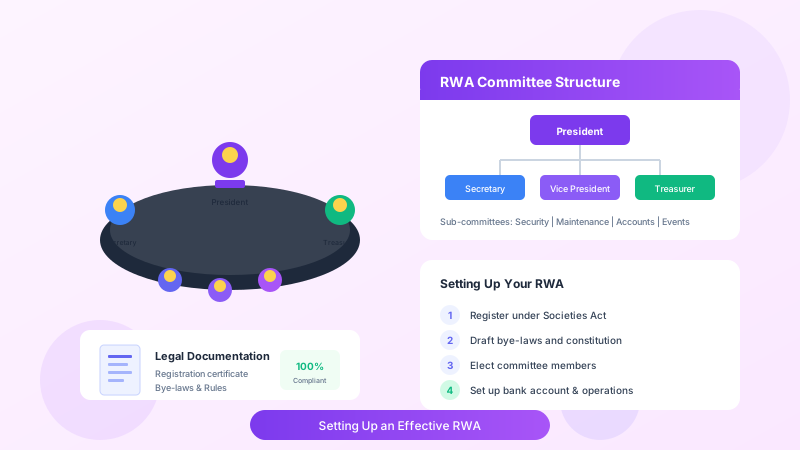
#RWA Committee Structure
#Standard Committee Positions
President/Chairman:
- Presides over all meetings
- External representation
- Casting vote in case of tie
- Conflict resolution authority
Vice President:
- Assists President
- Presides in President's absence
- Specific portfolio responsibilities
Secretary:
- Day-to-day administration
- Meeting coordination and minutes
- Correspondence management
- Compliance and documentation
Joint/Assistant Secretary:
- Assists Secretary
- Specific operational responsibilities
- Maintains member records
Treasurer:
- Financial management oversight
- Bill verification and payment approval
- Budget preparation
- Audit coordination
Committee Members:
- Typically 3-7 additional members
- Head sub-committees
- Resident liaison
- Specific portfolio responsibilities
#Sub-Committee Structure
For larger RWAs, sub-committees improve efficiency:
Finance sub-committee:
- Budget review
- Collection monitoring
- Investment decisions
- Audit liaison
Maintenance sub-committee:
- Vendor management
- Quality oversight
- Preventive maintenance planning
- Emergency repairs coordination
Security sub-committee:
- Security staff oversight
- Access control policies
- Emergency preparedness
- Incident investigation
Cultural/Events sub-committee:
- Festival celebrations
- Community events
- Sports activities
- Welcome programs for new residents
Grievance sub-committee:
- Complaint investigation
- Dispute mediation
- Recommendation to main committee
#Key Responsibilities of the RWA
#Financial Responsibilities
Budget management:
- Annual budget preparation with realistic estimates
- Monthly tracking against budget
- Variance analysis and corrective action
- Reserve fund maintenance
Collection management:
- Timely billing to all residents
- Multiple payment options
- Follow-up on defaults
- Legal action when necessary
Expenditure control:
- Competitive vendor selection
- Bill verification before payment
- Regular audits
- Transparent reporting to members
#Operational Responsibilities
Common area maintenance:
- Cleaning and housekeeping
- Landscaping and horticulture
- Equipment maintenance (lifts, pumps, generators)
- Civil repairs and upkeep
Security management:
- Guard deployment and supervision
- Access control implementation
- CCTV monitoring
- Emergency response
Utility management:
- Water supply and storage
- Common area electricity
- DG backup during outages
- STP/WTP operations
#Governance Responsibilities
Compliance:
- Statutory filings on time
- Safety certifications current
- Insurance coverage adequate
- Labour law compliance
Meetings:
- AGM within specified period
- Regular committee meetings
- Proper documentation of decisions
- Action tracking and follow-up
Communication:
- Regular updates to residents
- Transparency in operations
- Feedback collection and response
- Conflict resolution
#Common Challenges Faced by RWAs
#Challenge 1: Low Resident Participation
Root causes:
- Busy lifestyles of residents
- Past negative experiences
- Lack of visible impact
Solutions:
- Make participation convenient (online voting, hybrid meetings)
- Show clear outcomes of involvement
- Create diverse engagement opportunities
- Recognize and appreciate volunteers
#Challenge 2: Collection Difficulties
Root causes:
- Economic hardship of some residents
- Disputes over charges or services
- Lack of convenient payment options
- No consequences for defaulters
Solutions:
- Transparent and itemized billing
- Multiple payment channels including UPI
- Clear penalty structure enforced fairly
- Hardship provisions for genuine cases
- Legal action for persistent defaulters
#Challenge 3: Committee Burnout
Root causes:
- Same people serving repeatedly
- Excessive time demands
- Ungrateful residents
- Personal conflicts
Solutions:
- Term limits in bye-laws
- Clear role definitions
- Technology to reduce manual work
- Public appreciation for volunteers
- Professional support for large communities
#Challenge 4: Disputes and Factionalism
Root causes:
- Personality conflicts
- Disagreements on priorities
- Lack of transparent decision-making
- Historical grievances
Solutions:
- Focus on community interest over individuals
- Transparent decision-making processes
- Formal dispute resolution mechanisms
- Professional mediation when needed
#Modern Tools for RWA Management
Technology has transformed how RWAs operate. Key tools include:
#Society Management Software
Core capabilities:
- Automated billing and collection tracking
- Online payment integration
- Complaint and request management
- Communication and notifications
- Document storage and access
Benefits:
- 70-80% reduction in administrative time
- Improved collection rates
- Better resident satisfaction
- Audit-ready documentation
- Continuity across committee changes
#Digital Communication Platforms
Features needed:
- Announcements and notifications
- Discussion forums
- Polling and voting
- Event management
- Directory and contact information
Advantages over WhatsApp groups:
- Structured communication
- Searchable history
- Role-based access
- No personal number sharing
- Professional appearance
#Financial Management Tools
Capabilities:
- Budget tracking
- Expense categorization
- Bank reconciliation
- Financial reporting
- Tax compliance support
#Security Systems
Components:
- Digital visitor management
- Vehicle tracking
- Guard monitoring
- Intercom integration
- CCTV management
Ready to Transform Your Society Management?
Connected Hood makes managing your residential community effortless. From visitor management to billing automation, experience the difference.
#Conclusion
A well-structured RWA is the backbone of a harmonious residential community. By understanding the legal framework, establishing clear governance structures, and leveraging modern technology, your RWA can effectively serve residents while making volunteer management sustainable.
The key ingredients for success are: proper registration and documentation, clear roles and responsibilities, transparent financial management, effective communication, and engaged residents. Start with the fundamentals, build systems that create accountability, and continuously improve based on community feedback.
Remember, the goal of an RWA is not just efficient management but creating a community where families feel safe, connected, and proud to call home. With the right foundation, your residents' welfare association can achieve exactly that.
Looking for tools to streamline your RWA operations? Connected Hood provides comprehensive society management software designed for Indian residential communities, helping committees work efficiently while keeping residents informed and engaged.
Related Articles
Complete Guide to Managing a Gated Community in India
Managing Common Area Amenities: A Complete Guide for Housing Societies
7 Proven Ways to Improve Resident Engagement in Your Housing Society