
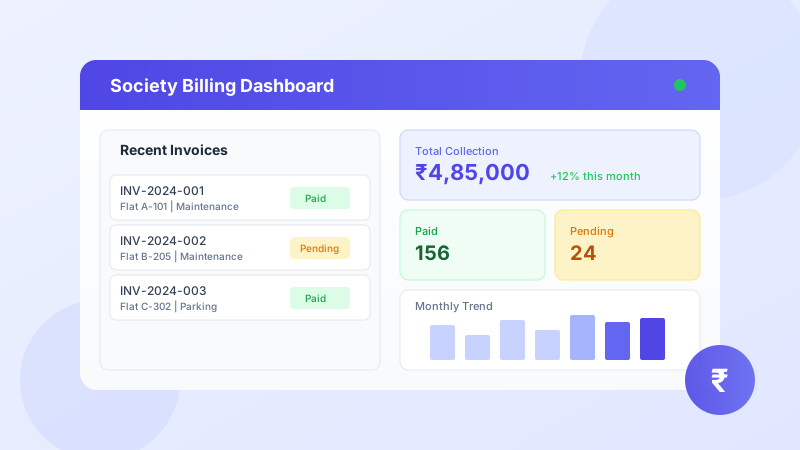
Getting Started with Society Billing: A Complete Guide

Connected Hood Team
The Connected Hood team shares insights on society management and community living.January 15, 2024
3 min read
Learn how to set up and manage your society's billing system efficiently. From maintenance charges to utility billing, this guide covers everything you need to know.
#Getting Started with Society Billing: A Complete Guide
Managing billing in a residential society can be challenging, especially when dealing with multiple types of charges, varying flat sizes, and different payment schedules. This comprehensive guide will help you set up an efficient billing system that works for everyone.
#Understanding Society Billing Components
A typical society billing system includes several components:
#1. Maintenance Charges
Maintenance charges are the backbone of society finances. These typically cover:
- Common area maintenance - Cleaning, lighting, and upkeep of shared spaces
- Security services - Guards, CCTV monitoring, and access control systems
- Administrative costs - Staff salaries, office supplies, and communication expenses
- Reserve fund contributions - Savings for major repairs and capital expenditure
#2. Utility Charges
Utility billing can be handled in two ways:
- Individual metering - Each flat pays based on actual consumption
- Proportional distribution - Total consumption divided by flat size or share
#3. Parking Charges
If your society has designated parking, you may need to bill for:
- Reserved parking spots
- Visitor parking permits
- Two-wheeler vs four-wheeler slots
#Setting Up Your Billing System
Here's a step-by-step approach to implementing efficient billing:
#Step 1: Define Your Charge Structure
Create a clear breakdown of all charges. Consider:
textMonthly Maintenance = Base Rate x Carpet Area (sq ft)
+ Parking Charges
+ Sinking Fund Contribution
+ Other Fixed Charges
#Step 2: Establish Due Dates and Penalties
Set clear expectations:
- Bill generation date - Usually the 1st of each month
- Due date - Typically 15-20 days from generation
- Late payment penalty - Usually 1-2% per month
#Step 3: Choose Your Payment Methods
Offer multiple payment options:
- Online bank transfers (NEFT/IMPS)
- UPI payments
- Credit/debit cards
- Post-dated cheques
- Cash (with proper receipt)
#Best Practices for Society Billing
#Transparency
Always provide detailed bills showing:
- Breakdown of each charge
- Previous balance (if any)
- Payment history
- Interest/penalty calculations
#Communication
- Send billing reminders 5-7 days before due date
- Provide monthly statements via email
- Display dues on the society app/portal
#Record Keeping
Maintain accurate records of:
- All transactions with timestamps
- Payment receipts and acknowledgments
- Outstanding dues and follow-up actions
- Annual financial statements
#Common Billing Challenges and Solutions
#Challenge 1: Late Payments
Solution: Implement automated reminders and consider early payment discounts rather than just late penalties.
#Challenge 2: Disputed Charges
Solution: Maintain detailed calculation worksheets and provide easy access to billing history.
#Challenge 3: Varying Flat Sizes
Solution: Use a standardized formula based on carpet area and publish the rate card publicly.
Ready to Transform Your Society Management?
Connected Hood makes managing your residential community effortless. From visitor management to billing automation, experience the difference.
#Conclusion
Effective society billing requires a combination of clear policies, modern tools, and consistent communication. By following these guidelines, you can create a billing system that is fair, transparent, and easy to manage.
Ready to streamline your society's billing? Contact Connected Hood to see how our platform can help automate your billing processes.
Related Articles
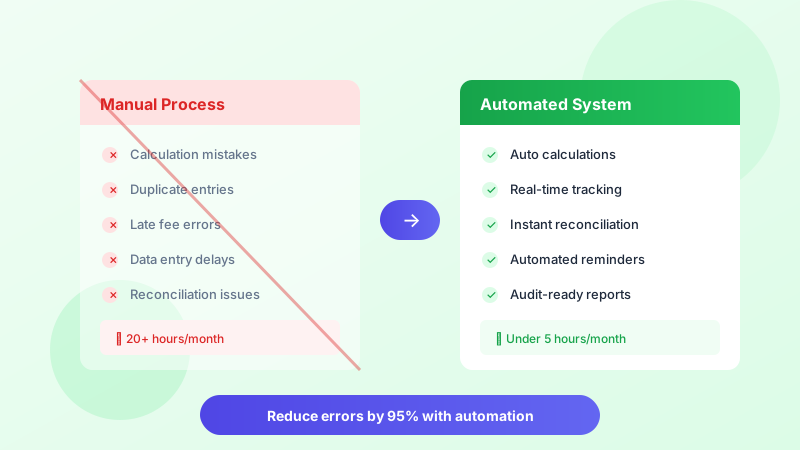
How to Reduce Manual Billing Errors in Housing Societies
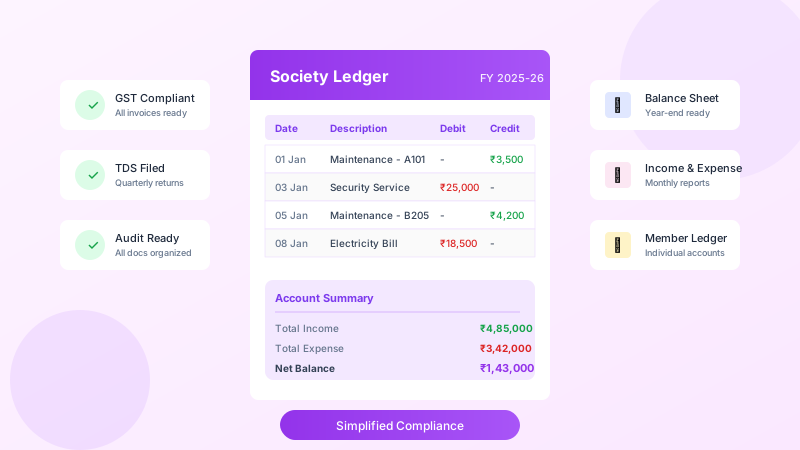
Society Accounting Made Simple: Compliance and Best Practices for RWAs
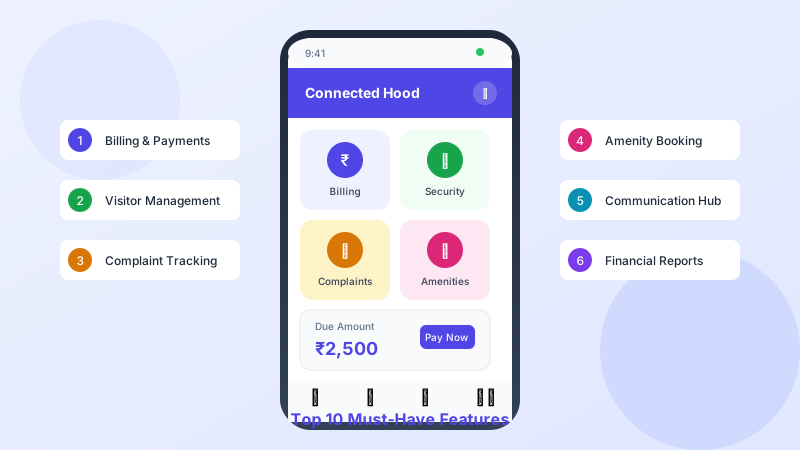
Top 10 Must-Have Features in a Society Management App