
Delivery Management in Gated Communities: Best Practices for 2026

Connected Hood Team
The Connected Hood team shares expert insights on society management and community living in India.January 25, 2026
11 min read
Learn how to efficiently handle package deliveries, food orders, and e-commerce shipments in your housing society with modern tracking and security protocols.
#Delivery Management in Gated Communities: Best Practices for 2026
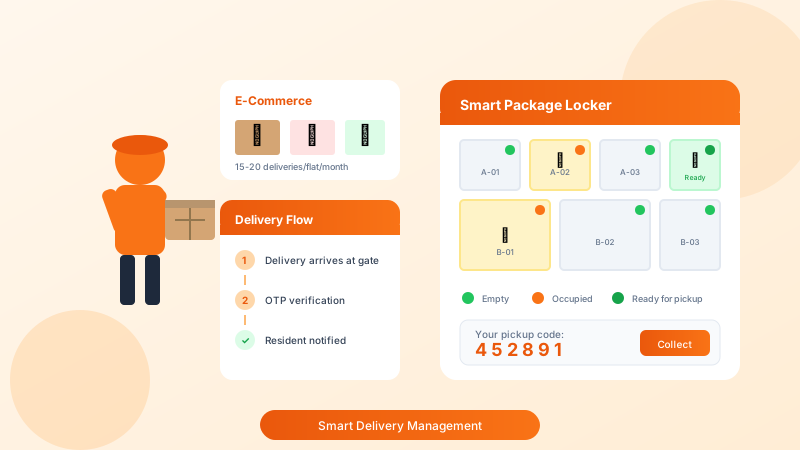
The average Indian urban household now receives 15-20 deliveries monthly—from Amazon packages to Swiggy orders, grocery deliveries to medicine drops. For gated communities, this delivery explosion has created both operational challenges and security concerns that traditional visitor management systems were never designed to handle.
In 2026, effective delivery management is no longer optional for housing societies. It directly impacts resident satisfaction, gate efficiency, and community security. This guide covers the challenges, modern solutions, and best practices for managing deliveries in gated communities.
#The Delivery Challenge in Gated Communities
#Volume and Variety
The numbers are staggering:
- E-commerce deliveries have grown 40% annually
- Food delivery orders average 8-10 per household monthly
- Quick commerce (10-minute delivery) adding to volume
- Grocery delivery becoming routine
- Medicine and essential deliveries time-sensitive
Types of deliveries to manage:
- Large packages (furniture, appliances)
- Small parcels (clothes, electronics, books)
- Food orders (restaurants, cloud kitchens)
- Grocery deliveries (scheduled and instant)
- Medicine and healthcare products
- Documents and couriers
- Subscription boxes (meal kits, flowers)
#Pain Points for All Stakeholders
For residents:
- Missing deliveries when not home
- Delays at gate cause food to go cold
- No visibility of package location
- Packages left with wrong person
- Security concerns about unknown delivery persons
For security guards:
- Overwhelming volume during peak hours
- Cannot verify every delivery person
- Packages piling up at gate
- Complaints when deliveries delayed
- Responsibility for lost packages
For delivery personnel:
- Long wait times at society gates
- Difficulty locating flats in large societies
- Multiple verification steps
- Restricted entry times
- No designated parking
For management committees:
- Resident complaints about delivery handling
- Security concerns from unknown entrants
- Package theft or loss incidents
- Gate congestion during peak hours
- No systematic tracking
#Modern Delivery Management Solutions
#OTP-Based Verification
The simplest digital enhancement for delivery management:
How it works:
- Delivery person arrives at gate
- Guard asks for OTP or delivery code
- Resident receives verification request on app
- Resident confirms or rejects
- Entry allowed upon confirmation
Benefits:
- Quick verification without phone calls
- Resident in control of who enters
- Audit trail of all deliveries
- Reduces guard decision-making burden
Limitations:
- Requires resident to be available
- Does not solve absent resident problem
- Each delivery needs manual approval
#Express Lanes for Verified Platforms
Streamline deliveries from trusted platforms:
Setup:
- Partner with major delivery platforms (Amazon, Flipkart, Swiggy, Zomato)
- Pre-register regular delivery personnel
- Dedicated entry lane or time slots
- Automatic logging of entries
How it works:
- Delivery person shows platform ID or scans badge
- System verifies against registered database
- Entry logged with resident notification
- Time-limited stay enforced
Benefits:
- Faster processing for common deliveries
- Reduced peak hour congestion
- Platform accountability for personnel
- Better experience for delivery workers
#Package Room/Locker Systems
For residents who are frequently away:
Package room model:
- Dedicated room near gate for package storage
- Delivery persons drop packages with guard/attendant
- Resident notified of package arrival
- Pickup during convenient hours
Smart locker model:
- Automated lockers at society entrance
- Delivery person deposits package, system generates code
- Resident receives code via SMS/app
- Self-service retrieval 24/7
Benefits:
- No delivery delays due to absent residents
- Packages secure until pickup
- Delivery persons do not need to enter premises
- Works for any delivery service
Considerations:
- Space requirement for lockers/room
- Investment in locker system
- Not suitable for large items
- Perishables need refrigerated option
#Digital Tracking Integration
Full visibility of delivery lifecycle:
Features:
- Track when package shipped
- Notification when out for delivery
- Alert when delivery person at gate
- Confirmation of delivery completion
- Photo proof of delivery
Integration sources:
- E-commerce platform APIs
- Courier company tracking
- Society visitor management system
- Building intercom system
#Best Practices for Different Delivery Types
#E-Commerce Packages
Policies:
- Accept packages only during defined hours
- Require resident pre-authorization for large items
- Photo documentation of package condition at receipt
- 48-hour pickup window before follow-up
Handling process:
- Delivery person arrives, shows tracking ID
- Guard verifies against expected delivery or contacts resident
- Package logged with photo
- Resident notified with pickup instructions
- Signature/OTP at collection
Security measures:
- Never leave packages unattended at doors
- Verify delivery person ID from known services
- Report suspicious delivery attempts
- Track uncollected packages
#Food Delivery
Speed is critical—optimize for fast processing:
Policies:
- Express lane for food delivery during meal times
- Maximum 5-minute gate processing time
- Direct entry to flat (not held at gate)
- Clear navigation assistance provided
Handling process:
- Delivery person shows order ID/OTP
- Resident confirms via app notification
- Entry allowed with flat directions
- Delivery completed at door
- Exit verified
Time slots to manage:
- Lunch rush: 12:00 PM - 2:00 PM
- Dinner rush: 7:00 PM - 10:00 PM
- Additional staff during these periods
#Grocery and Quick Commerce
Managing frequent deliveries:
Policies:
- Standing authorization for regular grocery services
- 10-minute delivery services need express handling
- Bulk grocery deliveries scheduled in advance
- Return pickup handling for bags/crates
Handling process:
- Regular services pre-registered
- Instant verification for registered services
- Entry logged automatically
- Resident notified
- Returns tracked separately
#Medicine and Essential Deliveries
Priority handling for time-sensitive items:
Policies:
- Medicine deliveries marked high priority
- Elderly resident deliveries handled with extra care
- Prescription verification not required (pharmacy's responsibility)
- 24/7 acceptance for medical emergencies
Handling process:
- Delivery tagged as medical/essential
- Expedited processing at gate
- Direct delivery to flat
- Family member can receive if resident unavailable
- Sensitive handling maintained
#Security Protocols
#Verifying Delivery Personnel
Standard verification:
- Platform ID card check
- Vehicle registration (for bikes/tempos)
- Cross-check with platform app if possible
- Photo capture at entry
Red flags to watch:
- No uniform or ID from claimed platform
- Reluctance to provide information
- Unexpected large deliveries without pre-notice
- Repeated visits without completing delivery
#Preventing Package Theft
At gate/package room:
- CCTV coverage of package storage area
- Logging of every package received and distributed
- Dual verification for high-value items
- Regular inventory of stored packages
During delivery:
- Photo proof of delivery
- Resident confirmation required
- Do not leave at door without acknowledgment
- Report missing packages immediately
#Handling Suspicious Deliveries
What to watch for:
- Unexpected packages with no return address
- Packages that look tampered
- Delivery person behavior out of ordinary
- Residents claiming they did not order
Protocol:
- Do not accept obviously suspicious packages
- Contact resident before accepting questionable items
- Report concerns to committee
- Document everything
#Managing Peak Delivery Hours
#Understanding Patterns
Typical peak times:
- Morning (10 AM - 12 PM): Grocery, scheduled deliveries
- Lunch (12 PM - 2 PM): Food delivery surge
- Evening (6 PM - 8 PM): E-commerce packages
- Dinner (8 PM - 10 PM): Food delivery surge
Weekend patterns:
- Higher e-commerce volume
- Later food delivery peaks
- More large item deliveries
#Capacity Planning
Staffing:
- Additional guard during meal-time peaks
- Dedicated delivery handling person for large societies
- Backup coverage for breaks
Infrastructure:
- Express lanes for verified delivery services
- Adequate package storage space
- Efficient logging system (avoid paper during rush)
#Queue Management
Preventing gate congestion:
- Separate delivery entrance if possible
- Staggered processing times for non-urgent
- Pre-registration reduces processing time
- Digital systems faster than manual
#Technology Implementation
#Basic Digital Setup
Minimum viable system:
- WhatsApp group for delivery notifications
- Google Form for logging deliveries
- Shared spreadsheet for package tracking
- Basic photo documentation on phone
Pros: Low cost, quick to implement Cons: Manual effort, limited scalability, no integration
#Intermediate Setup
Society app with delivery module:
- Delivery notifications in society app
- Resident pre-authorization feature
- Guard app for logging
- Package status tracking
Features to look for:
- OTP-based verification
- Photo capture capability
- Resident notification integration
- Basic reporting
#Advanced Setup
Comprehensive delivery management:
- Integration with major delivery platforms
- Smart locker system
- Vehicle recognition for delivery vehicles
- Analytics and optimization
Additional capabilities:
- Predict delivery volumes
- Optimize staffing
- Track delivery service performance
- Resident feedback integration
#Measuring Success
#Key Metrics to Track
| Metric | Poor | Average | Good | |--------|------|---------|------| | Average gate processing time | Over 5 min | 2-5 min | Under 2 min | | Resident complaints per month | Over 10 | 5-10 | Under 5 | | Package loss/theft incidents | Monthly | Quarterly | Rare | | Delivery person satisfaction | Complaints | Neutral | Positive | | Food delivery temperature complaints | Frequent | Occasional | None |
#Resident Satisfaction Indicators
- Complaints about missed deliveries
- Feedback on gate delays
- Package theft reports
- Requests for improved systems
- Participation in surveys about delivery experience
#Implementation Roadmap
#Phase 1: Foundation (Month 1)
Actions:
- Document current delivery handling process
- Identify major pain points
- Survey residents on delivery preferences
- Train guards on basic protocols
Quick wins:
- Clear delivery hours signage
- Basic logging system
- Peak hour awareness
#Phase 2: Digitization (Months 2-3)
Actions:
- Implement digital notification system
- Set up OTP-based verification
- Create express process for major platforms
- Establish package storage area
Investments:
- Society app with delivery features
- Basic storage infrastructure
- Guard training on digital tools
#Phase 3: Optimization (Months 4-6)
Actions:
- Analyze delivery patterns
- Optimize staffing for peaks
- Consider smart locker installation
- Integrate with more delivery platforms
Outcomes:
- Reduced processing times
- Higher resident satisfaction
- Better security
- Efficient operations
#Frequently Asked Questions
#Who is responsible if a package is lost?
Generally, the society is not liable for package loss unless negligence is proven. However, proper logging and photo documentation protects everyone. Clear policies should state that package storage is a convenience service, not a guarantee.
#Should we charge for package storage?
Some societies charge nominal fees for storage beyond 48-72 hours to encourage timely pickup. Others include it as part of maintenance. The key is having clear policies communicated to all residents.
#How do we handle cash-on-delivery orders?
COD orders should be delivered directly to residents, not held at gate. If resident is unavailable, delivery person must return later. Guards should never handle cash for deliveries.
#What about late-night food deliveries?
Define acceptable hours (e.g., until 11 PM) and communicate to residents. Deliveries outside hours can be received at gate, with resident meeting delivery person there rather than allowing entry.
Ready to Transform Your Society Management?
Connected Hood makes managing your residential community effortless. From visitor management to billing automation, experience the difference.
#Conclusion
Delivery management has evolved from a minor inconvenience to a critical operational function for gated communities. The societies that get this right enjoy happier residents, smoother operations, and better security. Those that ignore it face constant complaints, security vulnerabilities, and overwhelmed gate staff.
The good news is that solutions exist at every budget level. Start with clear policies and basic digital tools, then evolve based on your society's specific needs. The goal is not perfection on day one but continuous improvement toward a system that works for residents, delivery personnel, and management alike.
As e-commerce and delivery services continue to grow, this function will only become more important. Invest in getting it right now, and your society will be well-positioned for the delivery-heavy future.
Ready to streamline delivery management in your society? Connected Hood offers comprehensive delivery tracking and visitor management features designed for Indian gated communities. See how we can help your society handle the delivery surge efficiently.
Related Articles
Complete Guide to Digital Visitor Management Systems for Gated Communities
How Smart Entry Systems Improve Gated Community Security
Why Gated Communities Need Digital Visitor Management Systems