
How Smart Entry Systems Improve Gated Community Security

Connected Hood Team
The Connected Hood team shares expert insights on society management and community living in India.January 14, 2026
8 min read
Explore how QR codes, facial recognition, vehicle tracking, and smart delivery management enhance security in gated communities across India.
#How Smart Entry Systems Improve Gated Community Security
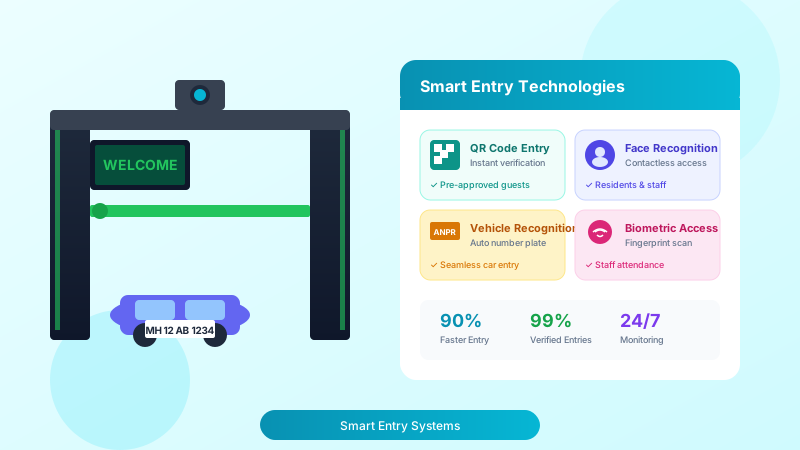
The image of a guard with a stick sitting at a boom barrier is becoming outdated in Indian gated communities. Modern smart entry systems combine multiple technologies—QR codes, biometrics, vehicle recognition, and mobile apps—to create security that is both stronger and more convenient than traditional methods.
With property crimes in urban areas remaining a concern, housing societies are investing in technology that goes beyond human vigilance. This article explores the various smart entry technologies available, their benefits, and how they integrate with society management systems for comprehensive security.
#Types of Smart Entry Systems
#QR Code-Based Entry
QR codes have become the most widely adopted smart entry method due to their simplicity and cost-effectiveness.
How it works:
- Resident generates a unique QR code for their visitor through the society app
- Visitor receives the code via WhatsApp or SMS
- At the gate, visitor shows the QR code on their phone
- Guard scans the code, which displays visitor details and resident authorization
- Entry is logged automatically with timestamp
Advantages:
- No additional hardware required beyond guard's smartphone
- Works instantly without internet on visitor's phone
- Time-limited codes prevent reuse
- Easy to cancel if plans change
- No physical pass to lose or forge
Security features:
- Each code is unique and traceable
- Expiry time can be set (e.g., valid for 4 hours)
- Single-use or multiple-entry options
- Geo-fencing to ensure code is used at correct location
- Audit trail of who generated and used each code
#Biometric Access Control
Biometrics add another layer of security, particularly for regular entrants like domestic staff and frequent visitors.
Fingerprint recognition:
- Fast and reliable for registered individuals
- Works well for daily staff attendance
- Relatively affordable hardware
- Concerns about hygiene (reduced post-pandemic)
Facial recognition:
- Contactless verification
- Can work from a distance
- Higher hardware cost
- Privacy considerations need addressing
- Performance varies with lighting and angles
Implementation tips:
- Use biometrics for staff and residents, not casual visitors
- Maintain backup entry methods for system failures
- Clearly communicate privacy policies
- Store biometric data securely with encryption
#Vehicle Recognition Systems
Automatic Number Plate Recognition (ANPR) technology identifies vehicles for seamless entry and enhanced security.
Resident vehicle entry:
- Camera captures approaching vehicle's number plate
- System matches against registered vehicles
- Boom barrier opens automatically
- Entry logged with timestamp and photo
- Resident receives notification if desired
Visitor vehicle handling:
- Temporary vehicle passes linked to visitor approval
- Parking slot assignment for expected vehicles
- Alert for unregistered vehicles requiring manual verification
Benefits:
- Eliminates sticker-based passes that can be transferred
- Creates photographic evidence of all entries
- Identifies patterns of suspicious vehicles
- Enables automated parking management
- Reduces peak-hour congestion at gates
Considerations:
- Camera quality crucial for accurate recognition
- Night vision capability essential
- Indian number plate formats vary significantly
- Two-wheelers are harder to capture consistently
#Smart Intercom and Video Calling
Modern intercoms integrate with mobile phones for remote visitor verification.
Features:
- Video call from gate to resident's smartphone
- Visual confirmation of visitor identity
- One-tap approval from anywhere
- Recording of all intercom calls
- Integration with visitor management logs
Use cases:
- Verify unexpected visitors before allowing entry
- Guide delivery personnel from remote location
- Check on elderly family members' visitors
- Handle visitor arrivals while away from home
#Delivery Management: A Critical Security Function
The explosion of e-commerce and food delivery has created new security challenges. A typical urban household receives 10-15 deliveries monthly, each representing a potential security gap.
#Smart Delivery Handling
Package deliveries:
- One-Time Password (OTP) verification for delivery personnel
- Photo capture of packages at gate
- Secure holding area for packages
- Resident notification with pickup reminders
- Signature or acknowledgment capture
Food deliveries:
- Express lanes for verified delivery partners
- Time-bound entry passes (valid for 15-20 minutes)
- Route tracking within society premises
- Automatic exit verification
Grocery and scheduled deliveries:
- Pre-approved recurring delivery slots
- Vendor verification and regular background checks
- Dedicated entry points during peak hours
#Delivery Locker Integration
Advanced societies are installing smart lockers for contactless deliveries.
How it works:
- Delivery person deposits package in available locker
- System sends code to resident
- Resident retrieves package at convenience
- Locker resets for next use
Benefits:
- No need for delivery person to enter premises
- Packages secure until pickup
- Works for residents who are not home
- Reduces delivery traffic inside society
#Integrating Smart Entry with Society Management Apps
The real power of smart entry systems emerges when they integrate with comprehensive society management platforms.
#Unified Dashboard
Management committees get a single view of:
- Real-time entry/exit activity
- Security alerts and anomalies
- Guard attendance and performance
- System health and issues
#Connected Security Features
Visitor pre-registration links to:
- Resident directory (verification)
- Parking management (slot assignment)
- Amenity bookings (event guests)
- Complaint system (maintenance visitors)
Staff entry connects with:
- Domestic staff database
- Attendance tracking
- Payment records
- Background verification status
#Emergency Response Integration
Smart entry systems enhance emergency preparedness:
- Instant lockdown capability
- Emergency services pre-authorization
- Evacuation headcount from entry logs
- Panic button integration
- Automated alerts to committee members
#Implementation Best Practices
#Start with Fundamentals
Before implementing advanced technologies:
- Ensure reliable internet connectivity at all gates
- Train security staff thoroughly
- Get resident buy-in through communication
- Start with simpler systems before advanced ones
#Phase Your Deployment
Phase 1: Digital visitor management
- QR code-based entry
- Mobile app notifications
- Digital logs replacing paper
Phase 2: Staff and vehicle management
- Biometric attendance for regular staff
- Vehicle database for resident cars
- ANPR for smoother resident entry
Phase 3: Advanced features
- Delivery management integration
- Facial recognition for residents
- Smart locker installation
- AI-powered anomaly detection
#Address Privacy Concerns
Smart entry systems collect significant personal data. Ensure:
- Clear privacy policy communicated to all
- Data stored securely with encryption
- Retention periods defined and followed
- Consent obtained for biometric data
- Compliance with applicable regulations
#Maintain Human Oversight
Technology enhances but should not replace human judgment:
- Guards remain essential for unusual situations
- Override capabilities for system failures
- Regular drills for backup procedures
- Escalation paths for security concerns
#Measuring Security Improvement
Track these metrics to evaluate your smart entry investment:
| Metric | Traditional System | Smart Entry Target | |--------|-------------------|-------------------| | Unauthorized entry incidents | Variable | Near zero | | Entry verification time | 3-5 minutes | Under 30 seconds | | Incident investigation time | Hours | Minutes | | Guard productivity | 40% on paperwork | 90% on security | | Resident security satisfaction | 60-70% | 90%+ |
#Cost Considerations
#Hardware Investments
| Component | Approximate Cost | |-----------|------------------| | Guard tablet with app | Rs. 10,000-20,000 | | ANPR camera system | Rs. 50,000-150,000 | | Biometric device | Rs. 15,000-40,000 | | Boom barrier with integration | Rs. 40,000-100,000 | | Smart intercom per unit | Rs. 8,000-15,000 |
#Software Costs
Most society apps include basic visitor management. Advanced features like ANPR integration and facial recognition may require premium plans ranging from Rs. 5,000 to Rs. 20,000 monthly depending on society size.
#ROI Factors
Smart entry systems pay for themselves through:
- Reduced security incidents and associated costs
- Lower guard manpower requirements
- Improved property values
- Reduced insurance premiums (some insurers offer discounts)
- Time savings for residents and committee
Ready to Transform Your Society Management?
Connected Hood makes managing your residential community effortless. From visitor management to billing automation, experience the difference.
#Conclusion
Smart entry systems represent a significant leap forward in gated community security. By combining QR codes, biometrics, vehicle recognition, and intelligent delivery management, societies can achieve security levels that manual systems simply cannot match.
The technology is now mature and affordable enough for societies of all sizes. The key is to implement thoughtfully—starting with fundamentals, addressing privacy concerns, and maintaining the human element that technology should enhance, not replace.
As security threats evolve, so must our defenses. Smart entry systems provide the foundation for a secure, convenient, and modern living experience that residents increasingly expect.
Ready to upgrade your society's entry security? Connected Hood offers comprehensive smart entry solutions tailored for Indian housing societies. From QR-based visitor management to vehicle tracking, we help communities stay safe without sacrificing convenience.
Related Articles
Complete Guide to Digital Visitor Management Systems for Gated Communities
Why Gated Communities Need Digital Visitor Management Systems
Delivery Management in Gated Communities: Best Practices for 2026