
Why Housing Societies in India Are Going Digital in 2026

Connected Hood Team
The Connected Hood team shares expert insights on society management and community living in India.January 5, 2026
8 min read
Explore the digital transformation trends reshaping Indian residential communities, from smart billing to AI-powered security and community engagement.
#Why Housing Societies in India Are Going Digital in 2026
India has over 100,000 registered cooperative housing societies and thousands more Resident Welfare Associations managing apartment complexes across the country. For decades, these communities operated on paper registers, manual accounting, and word-of-mouth communication. But 2026 marks a turning point: digital transformation is no longer optional for housing societies that want to function effectively.
This shift is not driven by technology for technology's sake. It is driven by real problems that traditional management methods can no longer solve. Let us explore why Indian housing societies are embracing digital solutions and what this transformation looks like in practice.
#The Forces Driving Digital Adoption
#The Complexity Explosion
Modern housing societies have grown far more complex than the cooperative housing movements of the 1970s and 80s.
Scale:
- Societies with 500+ flats are now common
- Multiple towers with different amenities and charges
- Mixed-use developments with commercial components
Service expectations:
- Residents expect 24/7 responsiveness
- Multiple payment channels demanded
- Instant communication preferred over notice boards
Regulatory requirements:
- GST compliance for larger societies
- RERA implications for certain transactions
- Increased audit scrutiny
Amenities and services:
- Swimming pools, gyms, clubhouses
- EV charging stations
- Co-working spaces
- Guest suites
Managing this complexity with paper and spreadsheets has become nearly impossible.
#The Volunteer Committee Crisis
Perhaps the most pressing driver of digital adoption is the sustainability of volunteer-led management.
The old model is breaking:
- Working professionals have no time for committee duties
- Younger residents refuse thankless administrative tasks
- Same people serve repeatedly, leading to burnout
- Knowledge lost when committee members change
Digital solutions help by:
- Automating routine tasks
- Providing continuity across committee changes
- Reducing time spent on administration
- Making volunteer work more manageable
#Resident Expectations in the Digital Age
Residents who manage their banking, shopping, and entertainment digitally expect the same convenience from their housing society.
They expect:
- Pay maintenance with one tap
- Book amenities without phone calls
- Get instant responses to complaints
- Access documents without visiting the office
- Communicate without joining noisy WhatsApp groups
Societies that do not meet these expectations face resident dissatisfaction and higher turnover.
#The Post-Pandemic Acceleration
The COVID-19 pandemic permanently changed how societies operate.
Contactless became essential:
- Digital visitor management replaced shared registers
- Online AGMs became legally accepted
- Digital payments eliminated cash handling
- Remote work increased daytime facility usage
Many societies that adopted emergency digital measures discovered they worked better than traditional methods and never went back.
#Digital Transformation Areas
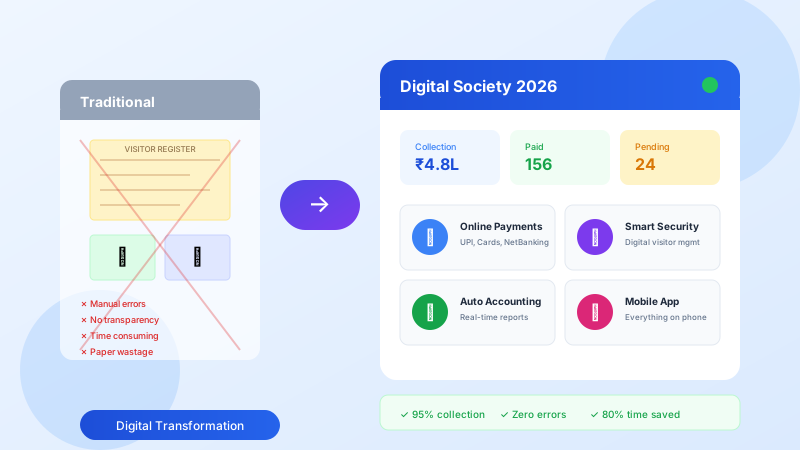
#1. Financial Management Goes Online
Before digital:
- Maintenance collected in cash or cheque
- Excel spreadsheets for accounting
- Annual statements prepared manually
- Audits required physical record review
After digital:
- UPI and card payments integrated
- Automatic ledger updates
- Real-time financial dashboards
- Audit-ready reports generated instantly
Impact metrics:
- Collection rates improved from 70% to 95%+
- Accounting time reduced by 80%
- Fewer billing disputes
- Transparent finances build trust
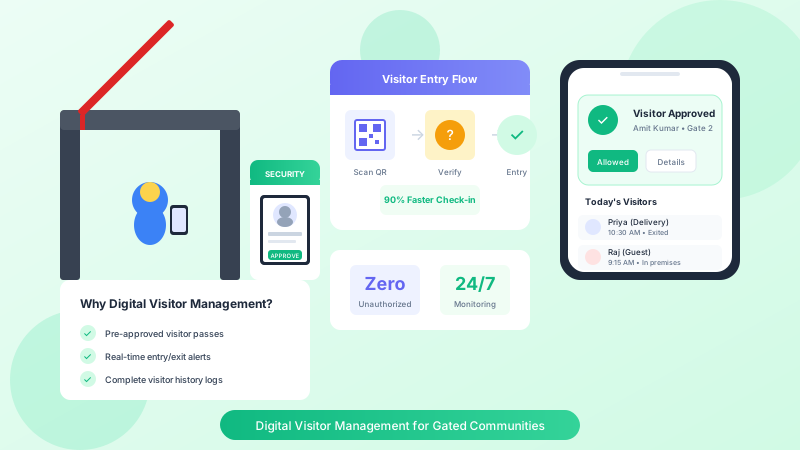
#2. Security Gets Smarter
Before digital:
- Paper visitor registers
- Manual guard rounds
- No vehicle tracking
- Reactive incident response
After digital:
- Digital visitor pre-approval
- App-based resident notifications
- Automatic number plate recognition
- Proactive security analytics
Real-world results:
- Unauthorized entries reduced by 90%+
- Incident investigation time from days to minutes
- Guard accountability dramatically improved
- Property crime reduced in digitized societies
#3. Communication Becomes Structured
Before digital:
- Notice boards ignored
- Chaotic WhatsApp groups
- Information lost in email threads
- No systematic feedback collection
After digital:
- Targeted notifications reach the right people
- Structured forums for different topics
- Archived communication history
- Polls and surveys for community input
Community benefits:
- Less noise, more signal
- Important announcements actually seen
- Reduced committee-resident friction
- Better community decision-making
#4. Amenities Enable Self-Service
Before digital:
- Phone calls to book facilities
- Manual registers with conflicts
- Payment tracking headaches
- No usage visibility
After digital:
- Online booking with real-time availability
- Integrated payment collection
- Automatic reminders and confirmations
- Usage analytics for optimization
Operational improvements:
- Zero booking conflicts
- Higher utilization rates
- Fair access for all residents
- Better maintenance planning
#5. Maintenance Requests Go Trackable
Before digital:
- Verbal complaints easily forgotten
- No status visibility for residents
- Repeat issues not identified
- Vendor performance unmeasured
After digital:
- Logged requests with photo/location
- Status updates visible to complainant
- Pattern analysis for systemic issues
- Vendor rating and performance tracking
Service improvements:
- Faster resolution times
- Fewer repeat complaints
- Accountability for vendors
- Data-driven maintenance decisions
#Success Stories: Societies That Transformed
#Case Study 1: Large Society in Pune (400 Flats)
Before transformation:
- Collection rate: 65%
- Monthly accounting effort: 40+ hours
- Visitor verification: None
- Resident satisfaction: 55%
After 12 months of digital adoption:
- Collection rate: 94%
- Monthly accounting effort: 8 hours
- Digital visitor management: 100% coverage
- Resident satisfaction: 82%
Key learnings:
- Start with billing (immediate ROI)
- Committee buy-in critical
- Phase implementation over 6 months
- Ongoing training needed
#Case Study 2: Premium Society in Bangalore (150 Flats)
Challenges addressed:
- Complex amenity bookings
- High-end security expectations
- Multiple vehicle per family
- Tech-savvy but time-poor residents
Digital solution components:
- Integrated society app
- ANPR for vehicle entry
- Smart locker for deliveries
- Biometric gym access
Results:
- Amenity utilization up 40%
- Zero security incidents in 18 months
- Delivery complaints eliminated
- Premium positioning maintained
#Case Study 3: Mid-Size Society in Mumbai (80 Flats)
Starting point:
- Volunteer committee with day jobs
- No budget for expensive solutions
- Mixed age group residents
- Limited tech infrastructure
Approach taken:
- Started with free tier of society app
- Upgraded as value proved
- Peer training among residents
- Gradual feature adoption
Outcomes:
- Management time cut by 60%
- Elderly residents helped by neighbors
- Monthly cost under Rs. 2,000
- Committee succession smoother
#Overcoming Digital Adoption Barriers
#Barrier 1: Elderly and Non-Tech-Savvy Residents
Solution approaches:
- Family members manage accounts for elderly
- Simplified interfaces with large text
- Phone support for those who need help
- Physical alternatives maintained during transition
- Peer training programs
#Barrier 2: Budget Constraints
Solution approaches:
- Start with free or low-cost solutions
- Calculate ROI from collection improvement
- Phase investments based on proven value
- Consider cost per flat (often under Rs. 15/month)
- Factor in volunteer time savings
#Barrier 3: Committee Resistance
Solution approaches:
- Demonstrate benefits through pilot
- Show how it reduces their workload
- Reference successful peer societies
- Involve resistant members in selection
- Gradual transition, not sudden change
#Barrier 4: Vendor Lock-In Concerns
Solution approaches:
- Choose platforms with data export
- Understand contract terms clearly
- Prefer standard data formats
- Maintain backup of critical data
- Evaluate switching costs upfront
#What to Expect in the Coming Years
#Near-Term Trends (2026-2027)
Becoming mainstream:
- Digital payment integration standard
- Visitor management apps universal
- Online AGMs accepted permanently
- Cloud-based accounting normal
Growing adoption:
- AI-powered security analytics
- Predictive maintenance systems
- Energy management integration
- Electric vehicle charging management
#Medium-Term Trends (2028-2030)
Expected developments:
- Voice-controlled home-society integration
- Drone-based surveillance and delivery
- Blockchain for society records
- Automated compliance systems
- Smart contracts for vendor agreements
#Society 4.0 Vision
The fully digital society of the future might feature:
- Zero paperwork for any transaction
- Predictive systems that fix issues before complaints
- Seamless integration with smart homes
- AI assistants handling routine queries
- Data-driven community planning
#Getting Started: A Practical Roadmap
#Assessment Phase (Month 1)
- Audit current processes and pain points
- Survey resident expectations and tech comfort
- Evaluate existing infrastructure
- Research available solutions
- Estimate budget and ROI
#Selection Phase (Month 2)
- Create requirements checklist
- Shortlist 3-4 vendors
- Request demos and trials
- Check references
- Negotiate terms
#Implementation Phase (Months 3-4)
- Set up technical infrastructure
- Migrate essential data
- Train committee members
- Soft launch with early adopters
- Gradual rollout to all residents
#Optimization Phase (Ongoing)
- Gather usage data and feedback
- Address adoption barriers
- Expand feature utilization
- Measure and report success
- Plan next phase improvements
Ready to Transform Your Society Management?
Connected Hood makes managing your residential community effortless. From visitor management to billing automation, experience the difference.
#Conclusion
Digital transformation in Indian housing societies is not a trend—it is an evolution driven by necessity. The societies that embrace this change will operate more efficiently, satisfy residents better, and attract more committed volunteers. Those that resist will struggle with increasing complexity, declining collections, and frustrated communities.
The technology is mature, affordable, and proven. The question is no longer whether to digitize but how quickly and comprehensively to do so. Start with your biggest pain point, prove the value, and build from there. The digital society is not the future; it is the present.
Ready to begin your society's digital transformation? Connected Hood provides comprehensive society management software designed specifically for Indian housing societies—from billing to security to community engagement. Explore how we can help your society thrive in the digital age.
Related Articles
Why Gated Communities Need Digital Visitor Management Systems
Smart Society: How Technology is Transforming Gated Community Living
How to Choose the Right Society Management Software: A Buyer's Guide