
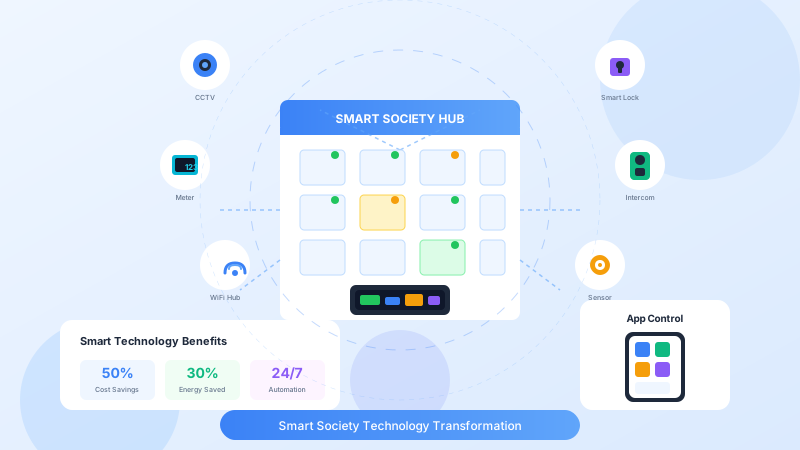
Smart Society: How Technology is Transforming Gated Community Living

Connected Hood Team
The Connected Hood team shares expert insights on society management and community living in India.January 30, 2026
11 min read
Explore how smart technology is revolutionizing gated community management in India. From digital access control to IoT integration, discover the future of community living.
#Smart Society: How Technology is Transforming Gated Community Living
The concept of a "smart city" has captured India's imagination, but the real transformation is happening at a more intimate scale: the smart society. Across the country, gated communities are embracing technology to solve age-old problems of security, management, and community engagement.
This is not about adding gadgets for the sake of modernity. It is about fundamentally rethinking how residential communities operate. The societies that have made this transition report 30-50% reduction in operational costs, near-elimination of security incidents, and dramatically higher resident satisfaction.
Let us explore how technology is transforming every aspect of gated community living in India.
#The Rise of Smart Communities in India
#Why Now?
Several factors have converged to make 2026 the inflection point for smart society adoption in India:
Smartphone ubiquity:
- Over 750 million smartphone users in India
- Even elderly residents increasingly comfortable with apps
- Affordable data plans enable always-connected living
Cloud computing maturity:
- Enterprise-grade systems now affordable for societies
- No need for on-premise servers
- Automatic updates and improvements
IoT ecosystem development:
- Indian manufacturers producing smart devices
- Integration standards maturing
- Costs declining rapidly
Post-pandemic mindset shift:
- Contactless operations proven necessary
- Digital comfort levels increased across demographics
- Remote management capabilities valued
Developer adoption:
- New projects launched with smart features
- Competitive differentiation through technology
- Resident expectations set higher
#Market Size and Growth
The Indian residential technology market is experiencing explosive growth:
- Society management software market: Rs. 2,500 crore (2025), growing 35% annually
- Smart security systems: Rs. 4,000 crore, growing 28% annually
- Community IoT devices: Rs. 1,200 crore, growing 45% annually
By 2028, industry analysts project that over 50% of urban gated communities will have adopted some form of smart management technology.
#Key Technologies Transforming Gated Communities
#Digital Access Control
Access control has evolved far beyond the guard with a register. Modern systems create a comprehensive security ecosystem.
Visitor management systems:
- Pre-registration via resident apps
- OTP and QR code verification
- Photo capture and ID logging
- Real-time entry/exit notifications
- Historical access records
Vehicle access automation:
- RFID tags for resident vehicles
- Automatic Number Plate Recognition (ANPR)
- Boom barrier integration
- Parking guidance systems
- Vehicle count and capacity management
Staff access management:
- Biometric registration for domestic help
- Daily attendance tracking
- Working hours monitoring
- Background verification integration
- Leave and replacement coordination
Benefits realized:
- 95%+ reduction in unauthorized entries
- 70% faster gate processing
- Complete audit trail of all access
- Reduced guard dependency
- Enhanced accountability
#Automated Billing Systems
Financial management has been transformed from error-prone manual processes to seamless automation.
Automated billing features:
- Rule-based charge calculation
- Multiple unit types and rates
- Consumption-based utilities
- Automatic late fee application
- Credit notes and adjustments
Digital payment integration:
- UPI and QR code payments
- Credit/debit card acceptance
- Net banking integration
- Auto-debit mandates
- Payment reminders and receipts
Accounting automation:
- Real-time ledger updates
- Bank reconciliation
- GST compliance where applicable
- Audit-ready reports
- Multi-year financial tracking
Impact metrics:
| Metric | Before Automation | After Automation | |--------|-------------------|------------------| | Collection rate | 65-75% | 92-98% | | Billing errors | 5-10% invoices | Under 0.5% | | Accounting time | 40+ hours/month | 5-8 hours/month | | Payment processing | 3-5 days | Same day | | Audit preparation | 2-3 weeks | 1-2 days |
#Smart Communication Platforms
Communication technology has replaced noisy WhatsApp groups with structured, purposeful community dialogue.
Announcement and notification systems:
- Targeted messaging by tower, wing, or role
- Priority levels for urgent matters
- Read receipts and engagement tracking
- Scheduled announcements
- Multi-language support
Community forums:
- Topic-based discussions
- Moderation capabilities
- Constructive feedback channels
- Idea and suggestion boards
- Polling and voting
Complaint and request management:
- Digital complaint logging
- Photo and location attachment
- Status tracking and updates
- Resolution timeline visibility
- Satisfaction feedback
Document management:
- Central repository for bylaws, minutes, budgets
- Version control
- Access control by role
- Search and retrieval
- Mobile access
Outcomes:
- 60% reduction in communication noise
- 3x faster issue resolution
- Higher AGM participation (hybrid meetings)
- Better community decision-making
- Reduced committee-resident friction
#IoT and Smart Home Integration
The Internet of Things is creating unprecedented visibility and control over community infrastructure.
Smart metering:
- Individual water meters with remote reading
- Electricity sub-metering for common areas
- Real-time consumption dashboards
- Leak and anomaly detection
- Usage-based billing accuracy
Infrastructure monitoring:
- Pump and motor health sensors
- Lift operation monitoring
- Generator status and fuel levels
- STP/WTP performance tracking
- Fire system status
Environmental systems:
- Automated common area lighting
- Motion-sensor efficiency
- Air quality monitoring
- Weather-based irrigation
- Solar panel performance tracking
Smart amenities:
- Gym equipment usage tracking
- Pool water quality monitoring
- Clubhouse booking systems
- EV charging station management
- Smart locks for common facilities
Emerging applications:
- Drone-based surveillance
- Robotic cleaning systems
- AI-powered security analytics
- Voice-controlled community services
- Predictive maintenance systems
#Benefits of Going Digital
#For Residents
Convenience:
- Everything accessible from smartphone
- No office visits for routine matters
- Self-service for bookings and payments
- 24/7 access to information
Security:
- Know who enters your community
- Verify staff working in your home
- Alert systems for unusual activity
- Evidence available when needed
Transparency:
- See how money is spent
- Track complaint resolution
- Access meeting minutes
- Understand decisions
Community connection:
- Engage with neighbors digitally
- Participate in community decisions
- Find shared interests
- Stay informed while traveling
#For Committee Members
Time savings:
- 60-80% reduction in administrative time
- Automated routine tasks
- Quick access to information
- Fewer resident follow-ups needed
Better decisions:
- Data-driven insights
- Trend analysis available
- Comparative benchmarking
- Expert recommendations
Reduced conflicts:
- Transparent processes
- Documented decisions
- Fair enforcement
- Clear communication
Easier transitions:
- Institutional memory preserved
- New members onboarded faster
- Processes documented
- Less dependency on individuals
#For the Community
Financial health:
- Higher collection rates
- Lower operational costs
- Better vendor negotiations
- Optimal resource utilization
Property value:
- Premium positioning
- Future-ready infrastructure
- Lower maintenance issues
- Attractive to buyers/renters
Sustainability:
- Reduced paper usage
- Energy efficiency
- Water conservation
- Waste management optimization
#Case Study: Digital Transformation Success
#Sunrise Towers, Bangalore (450 Flats)
Starting situation (2024):
- Paper-based visitor registers
- Excel accounting by treasurer
- WhatsApp groups for communication
- Monthly collection rate: 68%
- Resident satisfaction: 52%
- Committee member burnout: 3 resignations in 2 years
Digital transformation journey:
Phase 1 (Months 1-2): Foundation
- Society management software implemented
- Online payment integration
- Digital billing launched
- Committee and staff trained
Phase 2 (Months 3-4): Security upgrade
- Digital visitor management at all gates
- RFID vehicle access
- Staff biometric registration
- Guard app deployment
Phase 3 (Months 5-6): Community engagement
- Resident app rollout
- Communication migration from WhatsApp
- Digital complaint system
- Amenity booking system
Phase 4 (Months 7-12): Optimization
- Smart metering pilot
- Analytics-driven decisions
- Process refinement
- Feedback incorporation
Results after 18 months:
| Metric | Before | After | Improvement | |--------|--------|-------|-------------| | Collection rate | 68% | 96% | +41% | | Accounting hours/month | 45 | 6 | -87% | | Security incidents | 8/year | 0 | -100% | | Complaint resolution time | 12 days | 2 days | -83% | | Resident satisfaction | 52% | 89% | +71% | | Committee time/week | 20 hours | 6 hours | -70% |
Key success factors:
- Committee commitment to change
- Phased implementation
- Resident communication throughout
- Training and support provision
- Patience during transition
#Challenges and How to Overcome Them
#Challenge 1: Technology Adoption Resistance
Who resists:
- Elderly residents unfamiliar with apps
- Committee members comfortable with status quo
- Guards fearing job loss
- Residents with privacy concerns
Solutions:
- Family members help elderly (linked accounts)
- Start with pain points committee cares about
- Position technology as guard enabler, not replacement
- Clear data privacy policies and controls
- Hybrid options during transition
#Challenge 2: Implementation Complexity
Common issues:
- Migrating historical data
- Integrating with existing systems
- Training all stakeholders
- Managing change simultaneously
Solutions:
- Phased rollout over 6-12 months
- Start with one module, prove value, expand
- Vendor implementation support
- Internal champions for each module
- Patience and realistic timelines
#Challenge 3: Cost Concerns
Objections heard:
- "We cannot afford fancy technology"
- "Our society is too small"
- "ROI is unclear"
Responses:
- Most solutions cost Rs. 5-15 per flat per month
- Even 50-flat societies benefit
- Calculate collection rate improvement alone (often 20%+)
- Factor in volunteer time savings
- Compare to cost of one security incident
#Challenge 4: Vendor Selection
Risks:
- Choosing wrong vendor
- Vendor going out of business
- Getting locked in
- Poor support after sale
Mitigation:
- Check references from similar communities
- Evaluate vendor financial stability
- Ensure data export capabilities
- Start with pilot before commitment
- Clear SLAs in contract
#Challenge 5: Cybersecurity and Privacy
Concerns:
- Resident data protection
- System vulnerability to hacking
- Staff accessing sensitive information
- Third-party data sharing
Safeguards:
- Choose vendors with security certifications
- Role-based access controls
- Regular security audits
- Clear privacy policy
- Data stored in India (compliance)
#The Future of Smart Communities
#Near-Term Evolution (2026-2028)
Expected developments:
- AI-powered security analytics (unusual behavior detection)
- Voice assistant integration for society services
- Predictive maintenance preventing breakdowns
- Energy optimization through machine learning
- Seamless integration with smart home devices
#Medium-Term Transformation (2028-2032)
Emerging possibilities:
- Autonomous delivery robots within communities
- Drone surveillance and delivery
- AR/VR for property tours and community events
- Blockchain for transparent financial records
- Digital twins for infrastructure management
#Long-Term Vision (2032+)
The fully smart community:
- Zero-touch resident experience
- Self-optimizing infrastructure
- Predictive issue resolution
- Seamless city integration
- Sustainable by design
#Getting Started with Digital Transformation
#Assessment Phase
Evaluate current state:
- Document existing processes
- Identify biggest pain points
- Assess technology readiness
- Survey resident expectations
- Inventory existing systems
Define objectives:
- What problems to solve first?
- What outcomes matter most?
- What budget is available?
- What timeline is realistic?
- Who will champion this?
#Planning Phase
Create roadmap:
- Prioritize modules by impact and effort
- Plan phased implementation
- Allocate budget across phases
- Identify training needs
- Set success metrics
Select partners:
- Research available solutions
- Request demonstrations
- Check references
- Negotiate terms
- Plan pilot program
#Execution Phase
Implement systematically:
- Start with one module
- Train thoroughly before launch
- Communicate changes to residents
- Provide support during transition
- Gather feedback continuously
Scale progressively:
- Add modules as comfort grows
- Integrate systems where valuable
- Optimize based on data
- Expand successful pilots
- Celebrate milestones
Ready to Transform Your Society Management?
Connected Hood makes managing your residential community effortless. From visitor management to billing automation, experience the difference.
#Conclusion
The smart society is not a futuristic concept. It is the present reality for thousands of Indian gated communities that have embraced digital transformation. These communities enjoy better security, efficient operations, engaged residents, and sustainable management.
The technology is mature, affordable, and proven. The question is not whether your community should become smart, but how quickly and comprehensively to make the transition.
Start with your biggest pain point, whether that is collection challenges, security concerns, or communication chaos. Prove the value of digital solutions in that area, then expand systematically. Within 12-18 months, your community can join the ranks of smart societies setting the standard for residential living in India.
The future belongs to communities that embrace change. Is yours ready?
Looking to begin your smart society journey? Connected Hood provides comprehensive society management software with billing, visitor management, communication, and more, designed specifically for Indian gated communities. Let us help you build the community of the future.
Related Articles
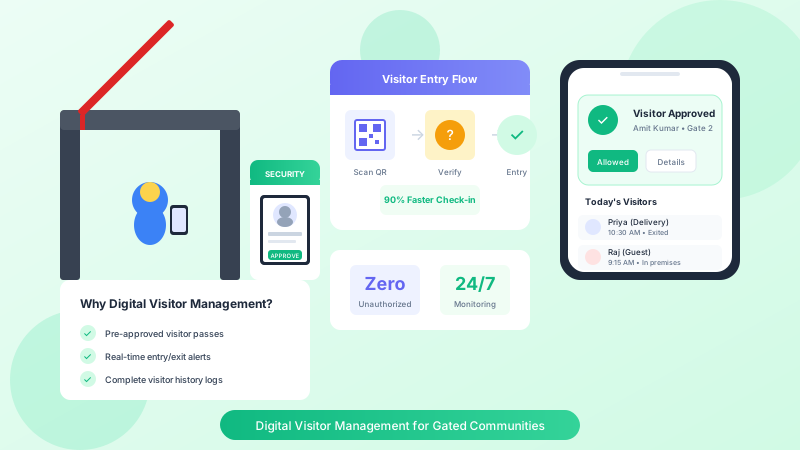
Why Gated Communities Need Digital Visitor Management Systems
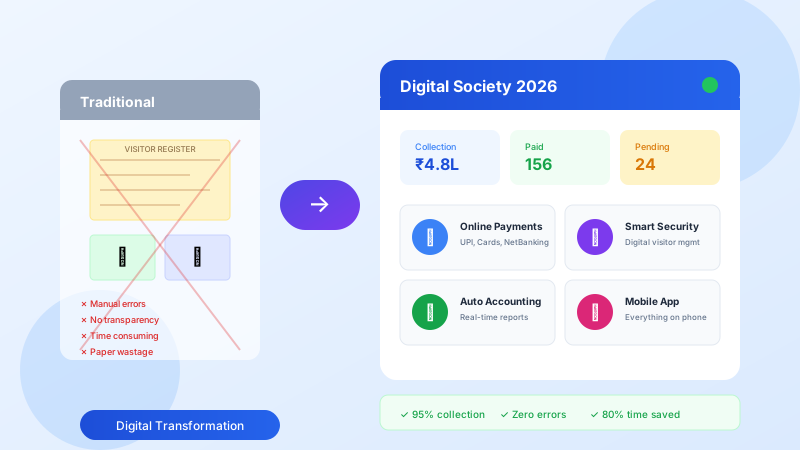
Why Housing Societies in India Are Going Digital in 2026
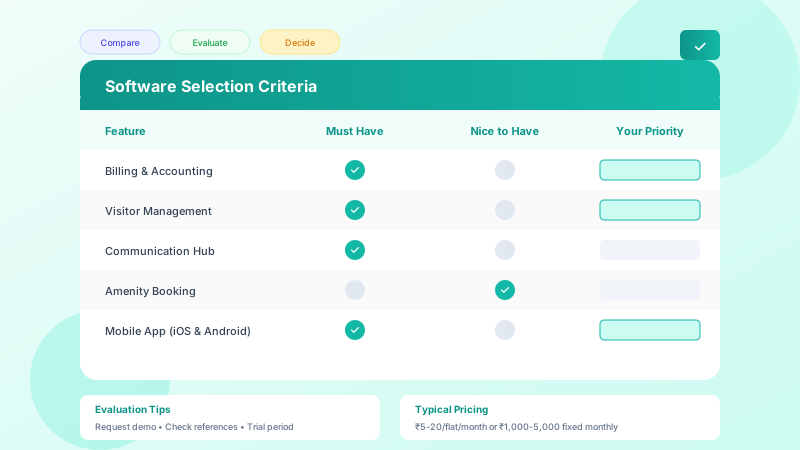
How to Choose the Right Society Management Software: A Buyer's Guide